Rocklin · Greater Sacramento · Zero-Emission
Leaf Cleanup & Leaf Removal in Rocklin & Greater Sacramento
Every fall, Sacramento-area properties disappear under a layer of leaves — and what looks like a seasonal nuisance is really a slow suffocation. Leaves mat down, block sunlight, trap moisture against the soil, and invite fungus and pests into turf that spent all summer building roots. Leaf cleanup is the simplest and most effective fall service there is: get the leaves off the lawn, out of the beds, and away from the property before winter rain glues them into a wet, rotting blanket.
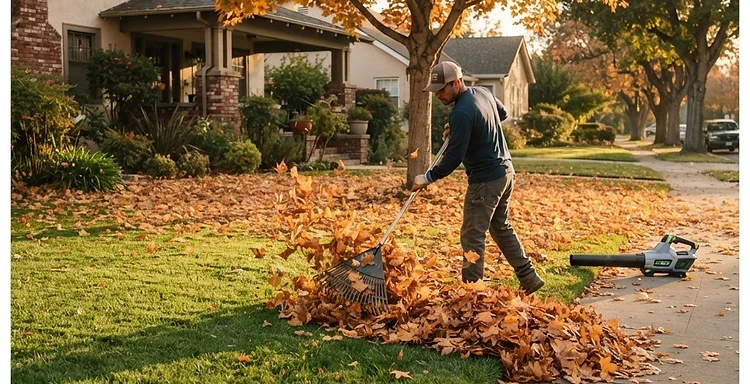
Our family crew clears leaves with rakes and quiet electric blowers — no gas engines screaming at 7 a.m., no exhaust drifting through your open windows. We work turf, planting beds, rock areas, walkways, patios, and driveways in one pass, then bag everything and haul it off the property the same day. What's left behind is a lawn that can breathe through the winter.
What a leaf cleanup visit covers
A cleanup is a full-property pass, not a quick blow across the front lawn. We start where leaves do the most damage — the turf, where matted leaves kill grass — then work outward into the beds, around shrubs and trunks, through rock and gravel areas where leaves wedge and rot, and across walkways, patios, decks, and driveways until no piles or strays remain.
Then we haul it: every bag loaded and removed, not left curbside or piled behind the fence. Where the material is clean and the beds can use it, we mulch some back into planting areas as free organic matter; the rest goes to green waste. Gates are latched and hard surfaces blown clean before we pull away.
Why leaves can't just stay where they fall
Grass needs light and airflow, and a few inches of leaves blocks both. Turf underneath yellows, thins, and dies back — often without anyone noticing until spring, when the damage shows up as bare, patchy ground that now needs seeding. Matted leaves also hold moisture against the crown of the plant, which is exactly the condition fungal diseases like snow mold and dollar spot need to take hold.
Leaves don't only hurt turf. In beds they smother groundcovers and low perennials; in rock areas they break down into a soggy layer that breeds weeds; on walkways and steps they turn slick with the first rain. In the street they wash into storm drains and load our waterways with the same nutrients that feed algae. Bagging and removing them is genuinely the cleaner choice for the whole block.
Repeat visits through peak drop season
Leaf drop in our region doesn't happen in one weekend. Ash, liquidambar, sycamore, and valley oaks shed from late October into January, with the heaviest weeks landing right after wind and rain — exactly when leaves are wettest, heaviest, and hardest to move. One cleanup in early November often leaves you buried again by December.
That's why most of our fall customers choose a repeating schedule: every two to four weeks through peak drop, with a final pass once the last tree empties. It costs less and takes far less effort than waiting for the property to be buried and paying for the recovery — a cleanup, plus aeration and overseeding — in spring.
Leaves off the lawn, before the rain sets in.
Call us and we'll walk your property together, free of charge.
Book a Visit · (916) 287-7058— Common Questions
Frequently asked questions.
Where we work
Leaf Cleanup & Removal across the Greater Sacramento area.
Our quiet, zero-emission family crew serves homes and businesses throughout Placer County and the Sacramento region.
— Keep Exploring
Every service your land could ask for.
Lawn Mowing & Maintenance
Regular mowing is the single most important thing you can do for a healthy lawn. Cutting at the right height encourages deep roots and thickens the turf so weeds can't take hold.
Learn moreFertilization
Proper fertilization feeds the root system the nitrogen, phosphorus, and potassium it needs, producing a dense, deep-green lawn that naturally outcompetes weeds.
Learn moreCommercial Properties
We provide reliable, scheduled care for offices, retail centers, HOAs, and rental properties across Sacramento — with a quiet, zero-emission fleet that won't disrupt your business hours.
Learn moreGrass Seeding
Bare patches, thin spots, and worn areas are open invitations for weeds. Overseeding fills in those gaps, thickens the turf, and introduces newer, more resilient grass varieties.
Learn moreIrrigation System Repair & Maintenance
We inspect, repair, and tune your irrigation so water lands where it should, on schedule, at the right volume. A well-maintained system lowers your water bill and is one of the best investments you can make.
Learn moreMulching
A fresh mulch layer locks moisture into the soil, moderates ground temperature, suppresses weeds, and prevents erosion. As it breaks down, it feeds the soil itself.
Learn moreLawn Pest Control
Grubs, chinch bugs, and sod webworms feed on grass roots and blades, and by the time you see the damage, the infestation is already deep. We spot the early signs and treat the problem at its source.
Learn more